

Page 5 in Project 2025. That’s where this all begins. This isn’t buried deep in some obscure appendix or footnote. It’s right there, front and center, at the beginning of Project 2025 on oage 5. And now Senator Mike Lee has introduced a bill to make page 5 a reality.
“Pornography, manifested today in the omnipresent propagation of transgender ideology and sexualization of children, for instance, is not a political Gordian knot inextricably binding up disparate claims about free speech, property rights, sexual liberation, and child welfare. It has no claim to First Amendment protection. Its purveyors are child predators and misogynistic exploiters of women. Their product is as addictive as any illicit drug and as psychologically destructive as any crime.”
“Pornography should be outlawed. The people who produce and distribute it should be imprisoned. Educators and public librarians who purvey it should be classed as registered sex offenders."
These quotes are pulled directly from page 5 of the Project 2025 agenda and reflect the document’s extreme stance on conflating pornography with LGBTQ+ identities and public education and written by the head of the Heritage Foundation himself, Kevin Roberts.
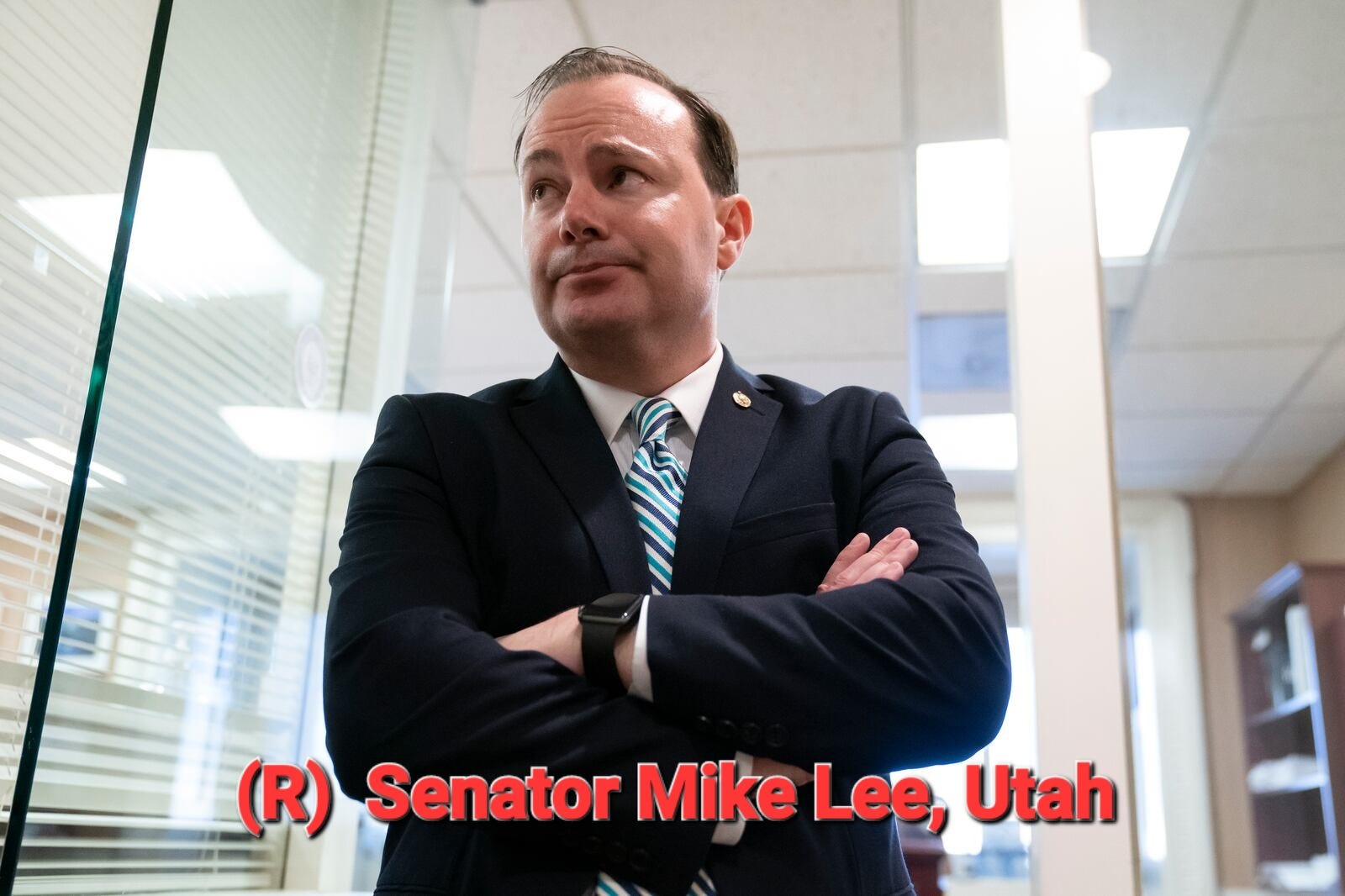
Thus, enter Utah's Senator Mike Lee and his IODA bill. On its face, Senator Mike Lee’s newly introduced Interstate Obscenity Definition Act (IODA) might sound like another conservative effort to curb online pornography. But peel back the moral panic and you’ll find something far more sinister: a blueprint for government overreach, tech censorship, and a theocratic reshaping of free speech in America. It’s not about porn. It’s about power.
It mimics past bills in Missouri.
Missouri has introduced legislation that could criminalize educators and librarians for providing certain materials or support related to gender identity.
House Bill 2885: Introduced by Republican State Representative Jamie Gragg in early 2024, this bill would make it a Class E felony for teachers or school counselors to assist in the "social transition" of a transgender student under 18. "Social transition" is defined as the process by which an individual adopts a name, pronouns, and gender expression that match their gender identity rather than their sex assigned at birth. If convicted, educators would be required to register as Tier I sex offenders, a designation that includes offenses like possession of child pornography and sexual abuse of a minor. This classification would prohibit them from being within 500 feet of school buildings, effectively ending their teaching careers.
Senate Bill 775: Passed in 2022, this law criminalizes the provision of "sexually explicit material" to students by school personnel, including librarians. The law specifically targets visual depictions of sexual content, which has led to the removal of certain graphic novels and illustrated books from school libraries. Violators can face up to a year in jail or a $2,000 fine.
These legislative actions have raised concerns among educators, librarians, and civil rights advocates, as it should! They argue that such measures could lead to censorship and hinder support for LGBTQ+ students.
But they're not alone! Across the United States, several states have introduced or enacted laws that criminalize or impose penalties on librarians and educators for providing access to materials related to LGBTQ+ topics or content considered "sexually explicit." These measures often redefine obscenity laws and remove longstanding protections for educational professionals.
In Alabama, a group called, "Clean Up Alabama" has pushed to repeal exemptions for libraries under the state's anti-obscenity laws. Their proposed changes would allow librarians to be jailed for up to one year and fined up to $10,000 for giving LGBTQ+ books to minors. As of now, despite their efforts, legislation has not put any laws into effect.
In Arkansas, in 2023 Act 372 was introduced. This allowed criminal prosecution of librarians and booksellers who provide materials deemed harmful to minors. Luckily, however, in late 2024, a federal judge struck down key portions as unconstitutional, preventing enforcement of this.
Indiana had House Bill 1447 in 2023, which stripped school librarians and educators of the “educational purpose” defense. Parental complaints about “harmful” books can now lead to felony charges and lawsuits. The law eliminates the “educational purpose” defense for school employees accused of disseminating material deemed “obscene” or “harmful to minors,” potentially exposing them to Level 6 felony charges. It was put into law January 1, 2024.
Idaho's House Bill 710 (2024) requires school and public libraries to move materials deemed harmful to minors into an adults-only section. If materials are not relocated within 60 days of a complaint, community members can sue for $250 in damages. The state is currently being sued by librarians, libraries, parents, students and civil rights activists for this becoming law in July of 2024.
Act 436 in Louisiana (effective August 1, 2023) requires libraries to adopt policies restricting minors’ access to “sexually explicit” material. Libraries must implement a card system that allows parents to control access or risk losing state funding.
Parental Rights in Education Act (originally passed in 2022, expanded in 2023 and alsonknown as HB 1557) for Florida officially bans classroom instruction on sexual orientation or gender identity in certain grades. Although a 2024 legal settlement clarified that the law does not ban LGBTQ+ books from school libraries, it still restricts how those topics can be taught in classrooms. This means through 12th grade students aren't recieving sexual education.
Tennessee, Utah, and Iowa is easier because the th⁰ree of these states have passed laws banning school books with sexual content or LGBTQ+ themes. The laws establish review processes and encourage mass book removals from public schools. In Tennessee this passed in 2022, Utah in 2022 with an expansion in 2024 and Iowa in 2023.
Which brings us to Wyoming. In 2023, a library director was fired after refusing to remove LGBTQ+ books and for hosting an event with a transgender performer. This reflected increasing pressure on libraries to self-censor in conservative counties. Also, the director is currently suing parents and the county she worked.
But, Wyoming is currently working on legislation that would eliminate legal protections for librarians and educators, potentially allowing them to be criminally charged for providing access to books with LGBTQ+ content or sexual education. A legislative panel began drafting bills to regulate library books containing sexual material. The focus is on materials in teen and young adult sections, particularly books that include LGBTQ+ themes. All of this in 2025. Who's a betting person with me to say these will pass?
So, all of this shows that Lee's bill isn’t isolated and has not only been promoted but previously tried in other states, making this national bill all that more real. It’s the continuation of a larger campaign that’s been years in the making.
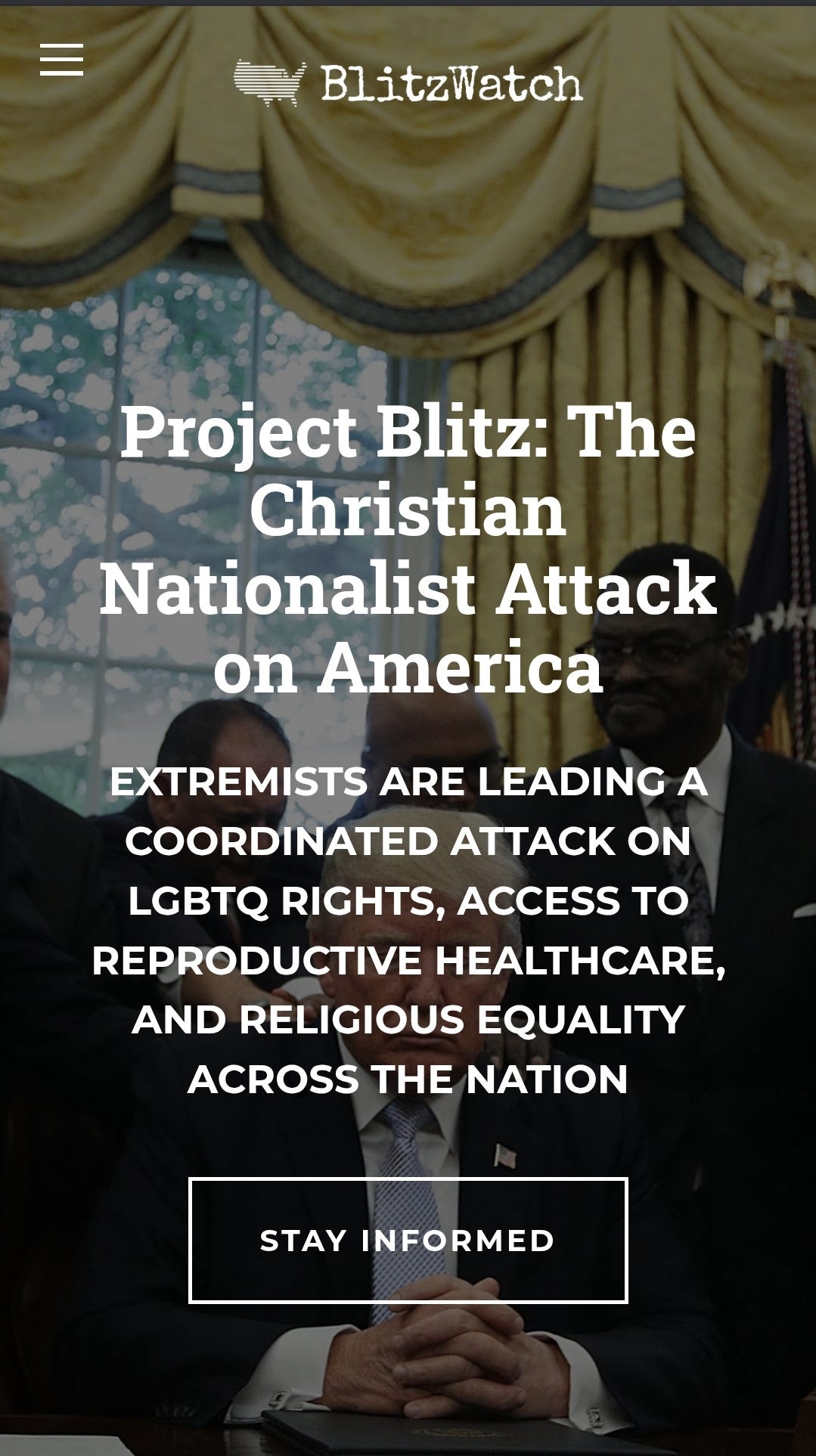
But all of those except Wyoming passed before 2025! Ah, now let's talk about the project you didn't know about: Project Blitz. Project Blitz has laid the groundwork. Project 2025 builds the house.
Project Blitz, launched by a coalition of Christian nationalist groups and documented extensively by watchdog site BlitzWatch.org, specifically targeted public schools and libraries as battlegrounds in a broader cultural war. These early campaigns outlined not just restrictions on sex education and LGBTQ+ content, but also frameworks to classify pornography in vague and sweeping terms, laying the legal and rhetorical groundwork for today's federal proposals.
BlitzWatch.org tracked how Christian nationalists behind Project Blitz promoted model legislation to force schools to label LGBTQ+ books and sex education materials as obscene, even where no explicit content existed. Their aim was to conflate educational content with pornography, all under the pretense of protecting children. They pushed for state laws that encouraged law enforcement involvement in libraries and called for the removal of books that undermined their version of Christian morality.
Fast forward to Project 2025, and those same priorities have been scaled up. What Project Blitz tested at the state level is now being repackaged for federal enforcement. The language about pornography, transgender ideology, and criminalizing public education workers is no longer subtext, it’s policy. The continuity between the two is not a coincidence, it’s a strategy. Christian nationalists have been refining this playbook for years, and now they’re ready to run it from the highest levels of government.
In the foreword to Mandate for Leadership: The Conservative Promise, Project 2025’s central policy document, Heritage Foundation President Kevin Roberts doesn’t mince words. Pornography, he says, is not a matter of free speech or sexual autonomy. It is, according to him, inextricably tied to the spread of transgender ideology and the sexualization of children. He argues it has no First Amendment protections.
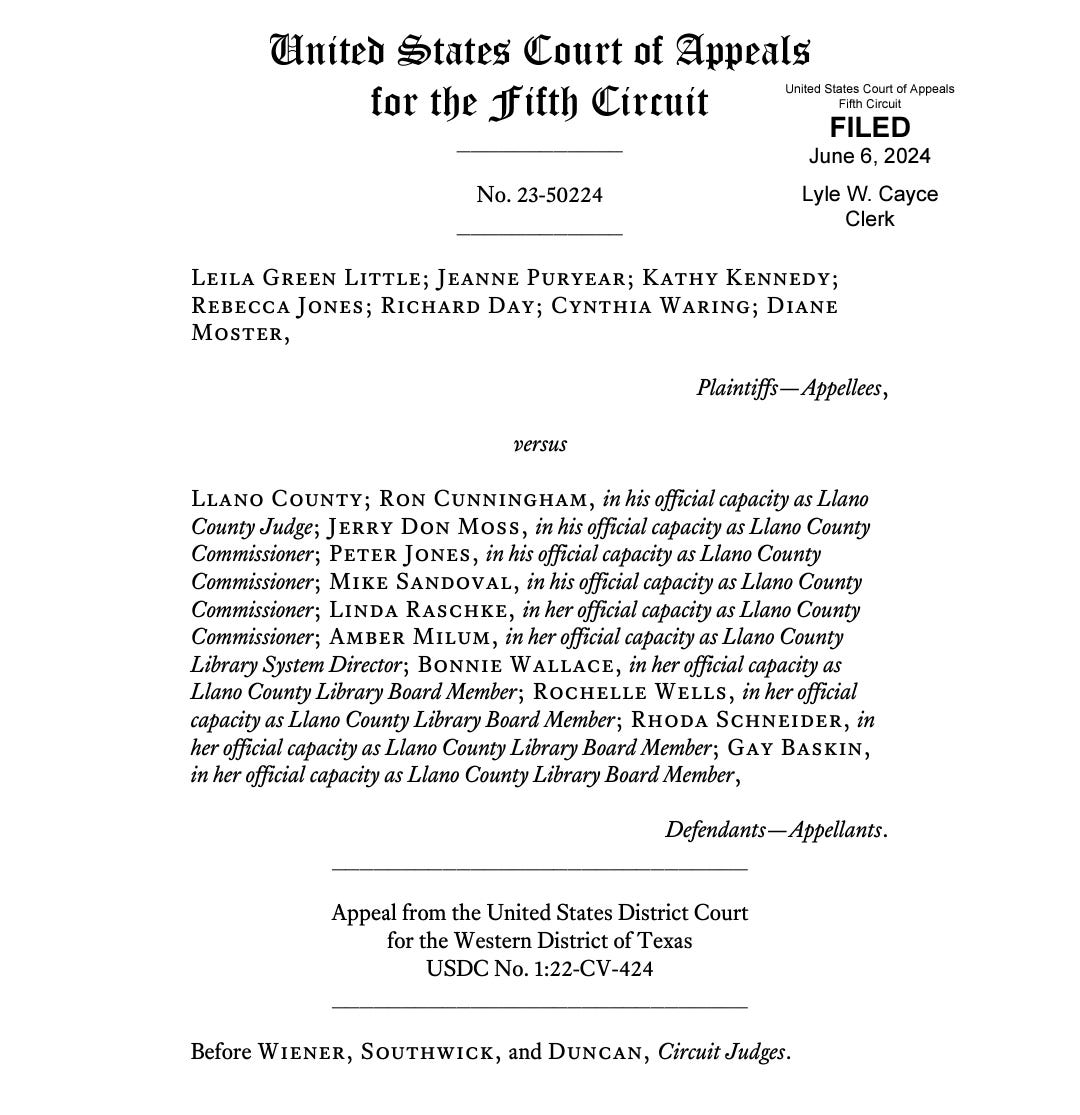
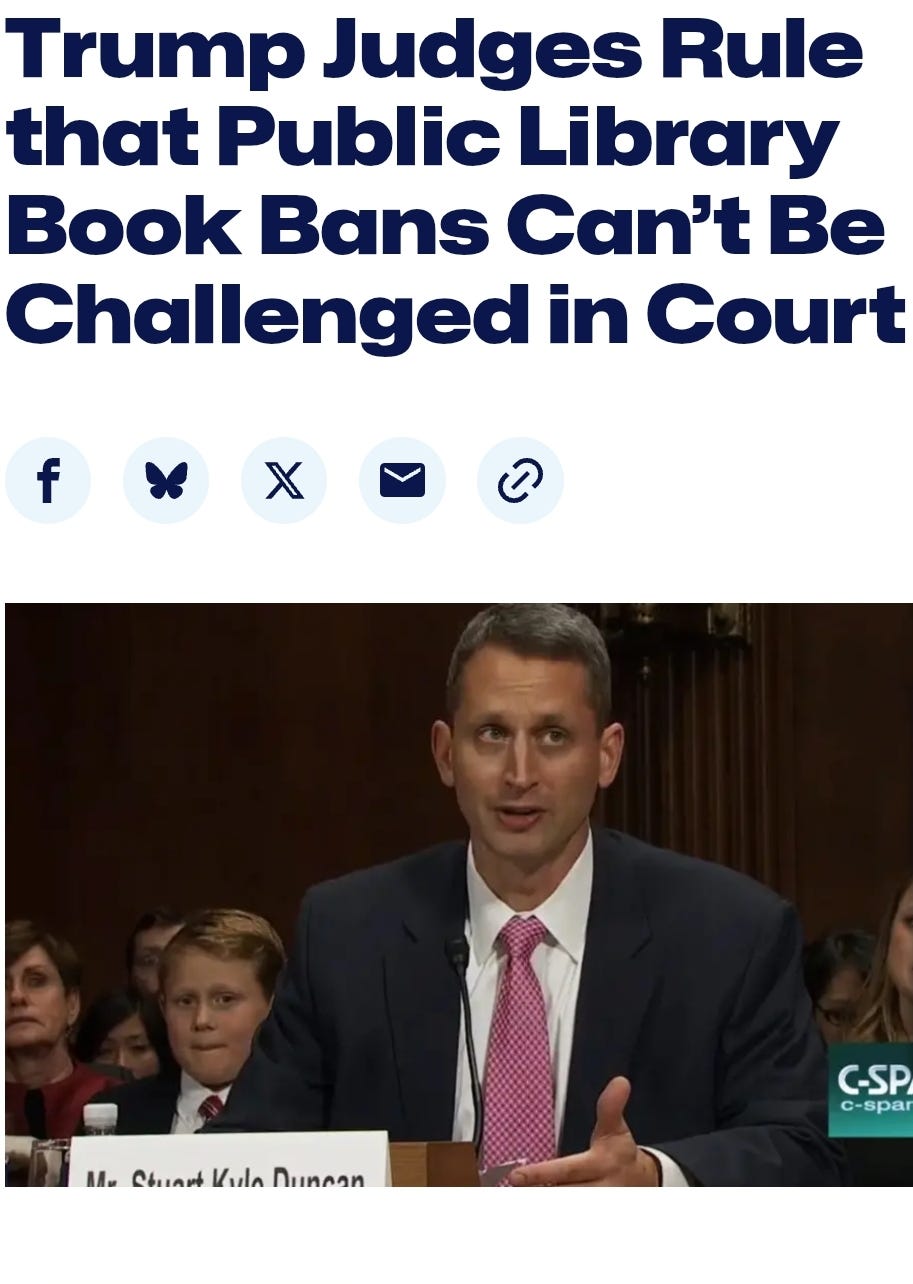
And as of only May 23, 2025, Little v Llano said just that. 5th circuit in New Orleans ruled over a Texas case and decided that there is no right o information at public libraries. By labeling book removals as “government speech,” this ruling clears a path for political actors to censor at will, mirroring Project 2025’s goal of dismantling First Amendment protections in schools, libraries, and beyond. This isn’t about library policy. It’s about silencing opposition.
In Roberts' vision, the people who produce and distribute it should be imprisoned. Librarians and educators who make it accessible, whether they agree with it or not, should be treated as sex offenders. Tech companies and ISPs that host or facilitate its transmission should be forcibly shut down.
Let that sink in: a future where librarians could be jailed for having a book someone labels as obscene. But wait, it's already happening! Let's try this on for size: A future where your internet provider is forced to police what websites you visit. A future where moral panic defines legality.
The IODA seeks to codify this worldview. It proposes a sweeping federal definition of "obscenity" that criminalizes not just explicit materials, but anything that offends a shifting set of ideological standards. There is no clear legal definition for what constitutes "pornography" under this act. That’s intentional.
This vagueness grants the federal government the power to prosecute people based on political and religious beliefs, targeting LGBTQ+ creators, feminist educators, sex workers, and even tech platforms that host their content.
Under the bill and the larger Project 2025 plan, ISPs, cloud services, web hosts, and even search engines could be forced to block or filter content deemed "obscene." That includes social media posts, blog articles, educational resources, or LGBTQ+ media, anything that challenges the moral authority of the state.
It paves the way for national firewalls, domain bans, and VPN crackdowns, tools already used by authoritarian regimes in China and Iran. The excuse? Combating porn. The reality? Silencing dissent and controlling who gets to speak.
In Garfield County, we’ve already seen what this looks like in miniature: book bans, law enforcement involved in library governance, county commissioners aligned with Lauren Boebert pushing religious moral codes onto public institutions. This is not hypothetical. It’s happening now.
In Garfield County, Colorado, we know what it’s like to have a library system targeted for political reasons. We’ve seen librarians harassed, books attempting to be pulled, and educational programs attacked for simply existing. Now imagine that mindset empowered at the federal level.
They’ll tell you this is about protecting kids. But let’s be honest, this is about abolishing the First Amendment, criminalizing sexuality, and shutting down any platform that doesn’t conform to their moral doctrine.
It’s not about porn. It’s about control. It’s about silencing minorities. It’s about turning America into a place where free thought is filtered through a government-approved lens.
If we don’t stop this now, we may soon find ourselves living in a country where the government decides not only what you can say, but what you’re allowed to see, feel, or even be.
Fight it while you can. Show up to your school and library boards. Be there to support. Write the letters. Start a substack. Inform yourself, continuously educated and know that these people are not out for your best interest. They're in it for power, to line their pockets and to control you.
Don't let them.
Mae Gray
Garfield County, CO